
Styrofoam Compactor can Effectively Dispose Foam Recycling
Since the invention of plastics by humans, 8.3 billion tons of plastic products have been produced globally, and 6.3 billion tons of these products have been discarded into waste plastics after use, of which only 570 million tons of waste plastics have been recycled and reused, and the remaining more than 5 billion tons of waste plastics Plastics have been abandoned in every corner of the world.
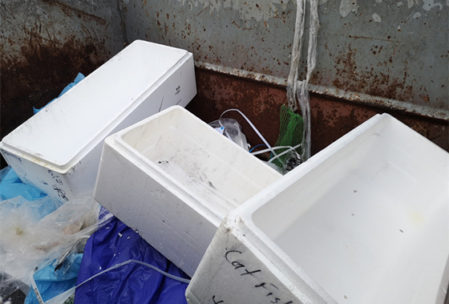
Currently, about 5.8 million tons of waste Styrofoam (EPS) plastics are produced globally each year, of which about 1.8 million tons are produced annually by China. Except for a few developed countries, the waste Styrofoam plastics in most countries have not been effectively recovered and utilized. Caused serious waste of resources and environmental pollution. Fortunately, there are a variety of the Styrofoam compactor on the market that can effectively deal with the problem of foam recycling.
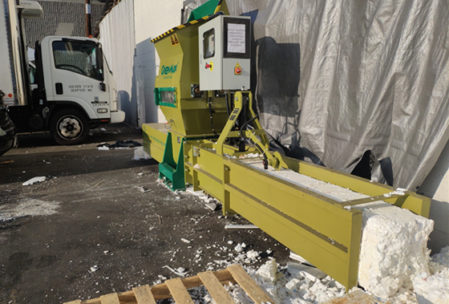
The two main parts of the Styrofoam compactor are foam crusher and the transportation of foam after crushing. Compactors suitable for foam crushing usually include heavy-duty crushers and single-shaft shredders. The output size of heavy-duty crushers is 8-16 mm, while the output size of single-shaft shredders is 40-100 mm. Because the twin-screw extruder is limited by the depth of the screw in the feed section, the feed size must be less than 12mm, so we choose a heavy-duty crusher to crush the waste Styrofoam plastic.
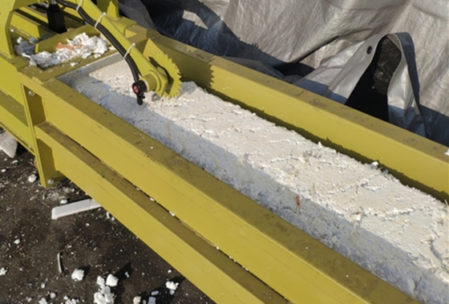
Common conveying methods after plastic crushing include closed pipeline conveying, screw conveying and belt conveying. Among them, the screw conveys the most widely used materials, and the feeding is stable, and it is not easy to cause jamming, and the failure rate is low. The actual use proves that the screw conveying is a more reasonable conveying method after the waste Styrofoam plastic is crushed.