
Foam Compactor – Essential Equipment for Waste Foam Recycling
In the 1970s, an investigation found that expanded polystyrene (EPS) would be absorbed by marine organisms after degradation in seawater, and the styrene monomer produced was toxic. This directly leads to the fact that those who fill their belly with foamed garbage do not get enough food and nutrition, or even do harm to their health. To make matters worse, some of these marine organisms will enter the human food chain directly.
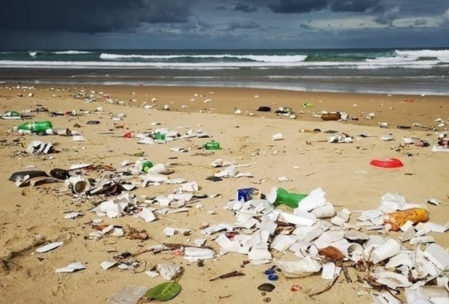
The treatment of marine foam waste is indeed more difficult than ordinary foam waste, but we can effectively treat these foams before entering the ocean. The effective treatment mentioned here does not refer to incineration or landfill, but to recycle and reuse it with a foam compactor. While protecting marine life, it also protects the environment and our lives.

Nowadays, the scale of foam recycling is increasing worldwide, and it is precisely because of this foam recycling equipment. The foam is crushed and compressed to facilitate storage and transportation, which is more conducive to the later foam granulation, that is, the modification and regeneration of the foam.
The resulting foam pellets will be used as raw materials for new products and continue to flow to the market and our lives. In this regard, INTCO Recycling GREENAMX has completed a full set of recycling processes, which can be used as a reference for companies interested in foam recycling.

The emergence of the foam compactor can be regarded as a magical invention. Many companies in Europe and America, such as foam producers, cutting agents, logistics providers, and professional recyclers, their warehouses can be seen everywhere in compacted foams piles of piles, which is one of their sources of economic income, because they can be sold to the reproduction industry at a high price.