GREENMAX EPS compactor can help to prove that EPS foam is recyclable
EPS, shorted for expanded polystyrene, although is popular among the consumers, its recycling is always a controversial topic.
Recycling of expanded polystyrene is a challenge itself, and relatively few recyclers, even of other plastics materials, are unwilling to accept EPS. Special equipment and technology setups are required to deal with this unusual material.
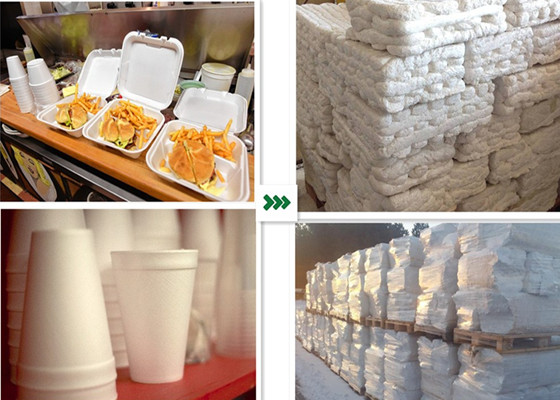
The initial problems with recycling EPS are not technical as such, but are in the realm of politics and economics. It is not easy to convince municipalities or other waste-collection entities that it is worthwhile to collect EPS, especially in a single stream, or even in mixed waste. The stuff is bulky, takes up a lot of space in collection containers, and is prone to flying away and creating debris during handling. Recycling EPS is not for the faint of heart. You’ve got to want to do it.
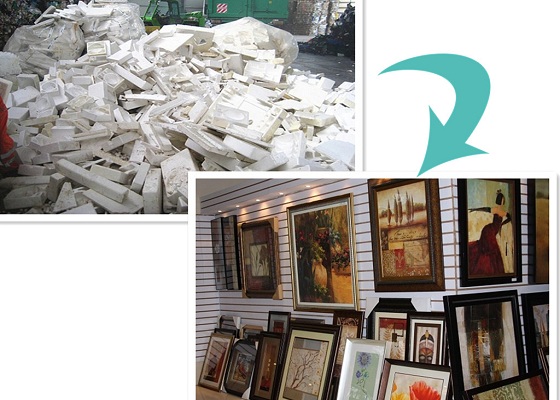
One significant motivation to recycle EPS is to turn these waste into new products, such as pens, photo frames and home decorations. In the past, the used polystyrene was usually discarded, and this non-degradable material was the culprit of white pollution. One of the best ways to prevent our environment from being polluted is to prove that EPS recycling is not only possible, but worthwhile.
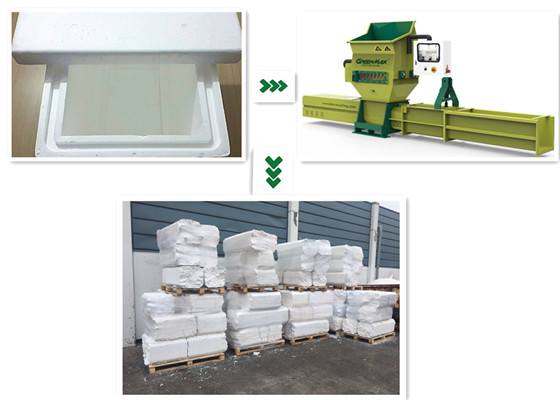
GREENMAX EPS compactor has commendably proved that EPS foam is recyclable. The compactor can smash the waste polystyrene materials into pieces by the blades and gears, and than after crushing and compressing, the waste EPS foam could be easily shaped into tight blocks like stones. With the volume reduction ratio of 50:1. the compacted EPS is more convenient to transport and recycle.
GREENMAX EPS compactor can help to prove that EPS foam is recyclable, but also remind us to remember the responsibility of environmental protection. EPS recycling is the responsibility for everyone of us.