Better acquaintance for polystyrene food containers and polystyrene recycling
Disposable foam containers are produced with polystyrene as the main raw material. Polystyrene is non-toxic and harmless. It has excellent sanitation and physical properties. More than 90% of the volume of a polystyrene (PS) foaming lunch box is air, which is the most economical material and unmatched by any other disposable containers.
Disposable foam foam food container is cost-effective, can be recycled and reused, and can produce a variety of recycled products. According to life cycle evaluation of the typical green environmental protection products, energy saving and emission reduction effect is obvious.

The recycled polystyrene waste can be widely used to produce picture frames, photo frames, building insulation materials, office appliances and other products. At present, CFCs has been used as foaming agent in the production of disposable foam containers in China, so there is no such thing like destroying the atmospheric ozone layer in the production process of disposable foam food containers.
Disposable foam food containers is still used in many countries such as the United States, Japan, South Korea, Europe and so on. Although foam food containers can cause a certain pollution on our environmental, it is not possible to eliminate it in a short time. So we choose to recycle it. PS foam containers recycling conforms to the environmental protection principle.
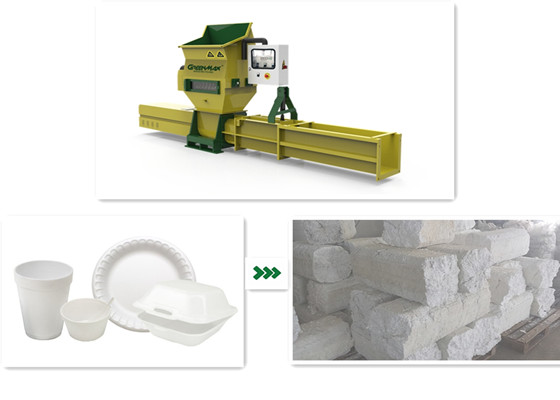
GREENMAX, which belongs to INTCO, is specialized in polystyrene recycling industry and manufactures recycling systems that enable the EPS and many other foam materials like PS food containers to reuse as much as possible in their production.
GREENMAX polystyrene compactor can realize foam volume reduction at a ratio of 50:1, which means we will save almost 50 trucks during transportation. This can save a lot of money and make polystyrene recycling better accepted by the public.
In short, we need to have a better acquaintance for polystyrene food containers and polystyrene recycling, so that we can know what we should do.