Solvay and 3A Jointly Expand Production of Specialty Foam
Material supplier Solvay is working with composite materials manufacturer 3A Composites Company production of special foam, for high-end transportation applications.
The two sides will work together to 3A of US factory new foam extrusion capacity. The new production capacity is expected to be commissioned in 2016.
Solvay in Brussels, Belgium and Switzerland Horgen 3A of the company’s cooperation, the goal is to produce cost-effective customized alternative materials to replace traditional materials in order to achieve weight loss purposes.

The initial products will be based on Solvay’s Radel brand polyphenylene sulfide (PPS) foam and the “sandwich sandwich” material, has been used on the Airbus A350 aircraft and solar-powered aircraft Solar Impulse.
Solar Impulse at the beginning of March 1 Global flight from Abu Dhabi, will complete trip around the globe within five months.
Company officials said the commercial aircraft and high-speed trains are replacing heavier plastic and metal structures with special foam. Lightweight Application cooperation projects include the cockpit parts, pipes and trolleys.
Solvay’s global aerospace and composites business development manager Armin Klesing said the deal “will enable large-scale supply of high-tech bubble becomes possible to change the face of the industry.” He added that the new material will make parts production Suppliers also have insulating properties and fire resistance.

3A Company CEO Roman Thomassin said in the release: “Our partnership with Solvay will be born, a technology leader in the field of high-end lightweight foam.”
Solvay has 26,000 employees worldwide, in 2014 global sales of over 12 billion US dollars. 3A has 2500 employees, located in Horgen’s Schweiter Technologies affiliated companies. 3A company formerly known as Alcan Composites.
Plastic Foam for Shockproof in Daily Use
EPS foam is a thermoplastic material per cubic meter volume contains 300-600 million independent sealed bubble, the volume of air containing 98% or more, due to the low thermal conductivity of the air, and because they were closed in the foam and convection are not be able to. Therefore, EPS is a very good thermal insulation performance materials.
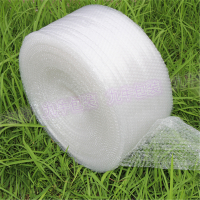
First, the definition of plastics.
Plastic is a resin as a main component, which could be molded into a certain shape under a certain temperature and pressure, and at the condition of room temperature can be maintained high molecular weight organic material a predetermined shape.
Resin refers to melting range usually transformed or when heated, by external force having flowability conversion, solid or semi-solid organic polymer or liquid at ordinary temperature. It is a plastic basic and most important component. Broadly speaking, any polymer in the plastics industry as a plastic base material can be referred to as resin.
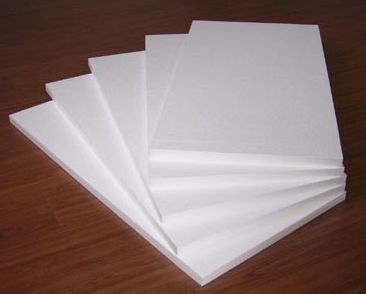
Second, the plastic classification.
There is no exact classification of plastic, generally classified as follows:
Physical and chemical properties of plastics by sub thermoplastics: within a specific temperature range can be repeatedly softened by heating and hardened by cooling plastic material such as polyethylene plastic.
Thermosetting plastics: due to heat or other conditions can be cured into insoluble infusible plastics material, such as phenolic, epoxy and other plastics.
High-density Polyethylene Foam Board Application
High-density polyethylene foam board density of 0.97 ~ 0.98g / cm3. It has good heat resistance and cold resistance, good chemical stability, but also has high rigidity and toughness, good mechanical strength. Dielectric properties, resistance to environmental stress cracking resistance is also good.
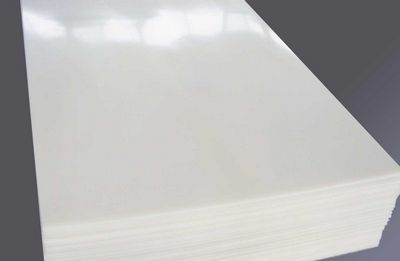
HDPE panels are widely used in gas transport, water supply, sewage, irrigation, mining and transport of fine solid particles, as well as oil, chemicals, and postal and telecommunications and other fields, especially in gas transportation has been widely used.

Low-density polyethylene sheet density of 0.92 ~ 0.93g / cm3. With the more flexible, with good extensibility, electrical insulation, chemical stability, processability, but the mechanical strength, moisture barrier properties, gas barrier properties and poor solvent resistance.
New Masterbatch have Influence on the Life of Greenhouse Films
Tosaf (Kfar Yona, Israel) announced that it has developed a new type of masterbatch for greenhouse film, which can absorb ultraviolet light after a small amount of this masterbatch. As a result, its life can be greatly extended. Tosaf is a leading additives, compounds and masterbatch manufacturers.
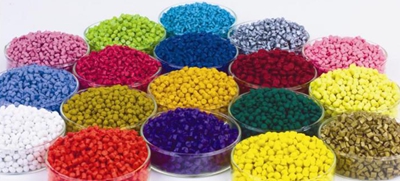
In a full range of accelerated aging test shows that the thin film containing an organic ultraviolet absorber and NOR hindered amine light stabilizer structure, which is also similar. Thus, the overall service life of greenhouse films may be extended 1 to 3 years according to different areas.
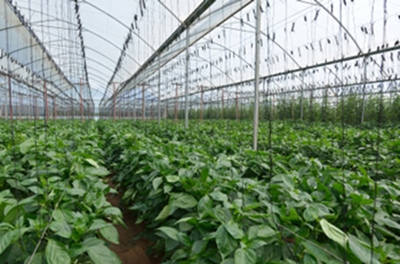
Adding new mastebatch to the film that can be absorbed, and can provide many advantages for greenhouse operators. So these benefits can ultimately improve product quality. Such a thin film could improve the long-term weather resistance because the ultraviolet absorbing effect over the entire service period. In addition, the film itself can also be largely preserved as it has antiviral effect. Many insects are potential carriers of the virus that will need to spread the ultraviolet. So the insect won’t go deep into the planting areas through ultraviolet absorbing film. However, the company also noted that the lack of UV will prevent the bees into the planting area.
According to Tosaf, this absorb ultraviolet film enable red rose growers to get benefits as it can effectively prevent black petals.
China Focus on Recycling Plastic Lunch Boxes
Experts said the current situation disposable plastic foam lunch boxes, the National Development and Reform Commission is prepared to formally national waste disposable plastic foam lunch boxes included in the compulsory recycling directory country, and has been in consultation with the State Administration of Taxation. As a result, recycling companies have given financial support to discarded plastic foam lunch boxes in recycling.

How to strengthen the recovery and completely solve the problem of plastic waste pollution has attracted the attention of authorities. In addition, related experiments and the preparatory work is in progress, and the resulting recovery of derivate products have been used in everyday life.

Form the government point of view, China plastic cutlery Joint Office, China Institute of Environmental Sciences and Professional Committee of China Green Packaging Food Packaging Association of Preparatory Committee have sent experts to be set up on the existing food packaging to start research work.

The NDRC is prepared to formally abandon disposable plastic foam lunch boxes included in the compulsory recycling directory country, and has been in consultation with the State Administration of Taxation, Ministry of Finance and other relevant ministries, to engage in the waste recycling plastic foam lunch boxes, recycling companies give financial support, tax reduction or exemption, and establish a nationwide system of effective recovery and disposal of the world’s advanced level of technology and equipment companies.